
The book BLACK AF HISTORY The unwhitewashed history of America by Michael Harriot has taught me so much about American history from a different and eye-opening perspective. I’m not American. I wasn’t born and raised here, which is why I’ve been making an effort to truly understand the history of the country I live in. I don’t want to be here and know nothing about how this place came to be.
Below is what I’ve learned about Thanksgiving.
🌽 What Actually Happened at the First Thanksgiving (1621)
1. It wasn’t called “Thanksgiving”
The Pilgrims in Plymouth never called the 1621 gathering “Thanksgiving.”
A Thanksgiving back then was a religious day of prayer and fasting, not feasting.
The 1621 event was more like a harvest celebration.
🦃 2. It was a 3-day feast
The event lasted three days, sometime between late September and early November of 1621.
It was held after the Pilgrims’ first successful harvest in the New World.
🤝 3. About 90 Wampanoag people attended
The Wampanoag were not “invited” in the way we think today.
The settlers fired guns and cannons to celebrate their harvest. The noise alerted the nearby Wampanoag. About 90 Wampanoag men, led by Ousamequin (Massasoit), showed up—partly out of diplomacy, partly to investigate, and partly because they had a peace treaty with the settlers.
Despite the tense circumstances, they ended up sharing food and participating.
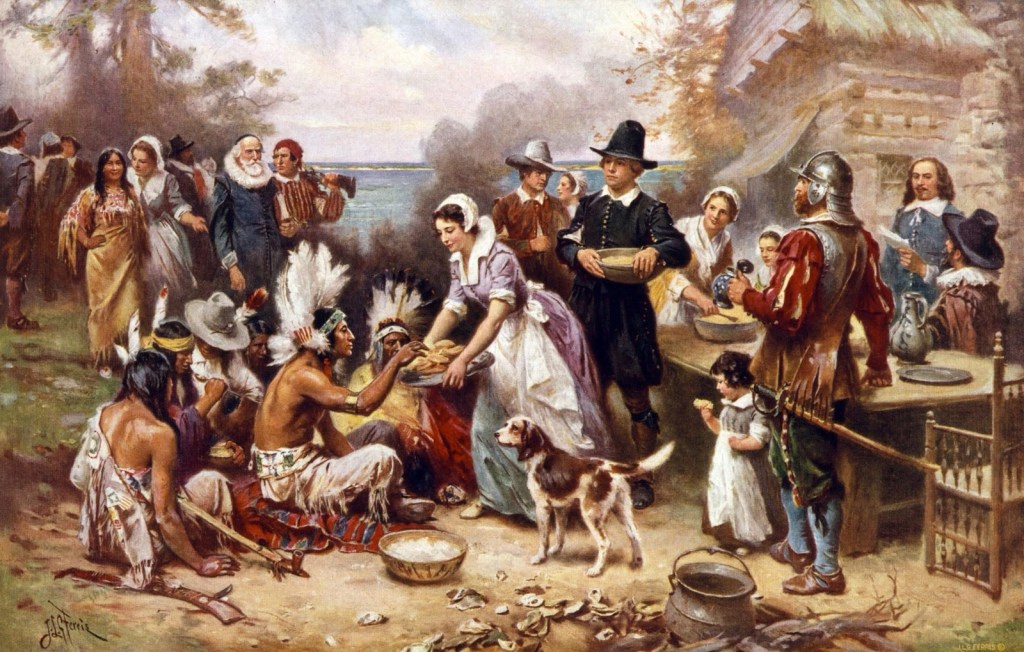
🍁 4. The foods were nothing like today
There was no turkey, mashed potatoes, pumpkin pie, or cranberry sauce.
Foods likely included:
Venison (deer)—provided by the Wampanoag Wild fowl (possibly duck or goose) Cornmeal porridge Eel and seafood Pumpkin and squash Nuts, beans, wild onions
Potatoes and sugar were not available.
⚔️ 5. The Wampanoag had already been devastated
Before meeting the Pilgrims, the Wampanoag had suffered a deadly epidemic (likely leptospirosis) from 1616–1619 that killed up to ⅔ of their population.
This weakened them and made forming an alliance with the English a strategic necessity against rival tribes.
🤫 6. Peace didn’t last long
Although the 1621 feast was peaceful:
Tensions grew in the following decades. Land disputes, colonial expansion, and cultural conflict eventually led to King Philip’s War (1675)—one of the deadliest conflicts in American history. Many Native people were killed, enslaved, or displaced.
So the idyllic “cooperation” story taught in schools leaves out the long-term consequences.
🌟 So what’s the real truth?
The first Thanksgiving was:
A harvest celebration, Shared between two very different groups, During a short moment of cooperation, That was followed by decades of conflict and tragedy for Native people.
It wasn’t the perfect, friendly dinner often portrayed—but it was a real moment of coexistence in a much more complicated and painful history.
 Angelino AF (Asian Flavor)
Leave a comment